
The End of Welded Battery Packs: EU Regulatory Change
New Battery Rules Are Reshaping Europe's Electric Future
The European Union is moving towards sustainability in battery design. EU Battery Regulation (EU) 2023/1542, effective August 17, 2023, ends the era of disposable batteries. It demands designs that prioritize repair, replacement, and recycling across the full lifecycle. One of the core requirements, found in Article 11, paragraph 5, directly addresses how battery cells must be connected inside a pack.
Article 11(5): Banning Permanent Joining of Battery Cells
For light means of transport—like e-bikes, e-scooters, and e-mopeds—Article 11(5) requires cells and modules to be removable, replaceable, and substitutable by independent operators or end-users.
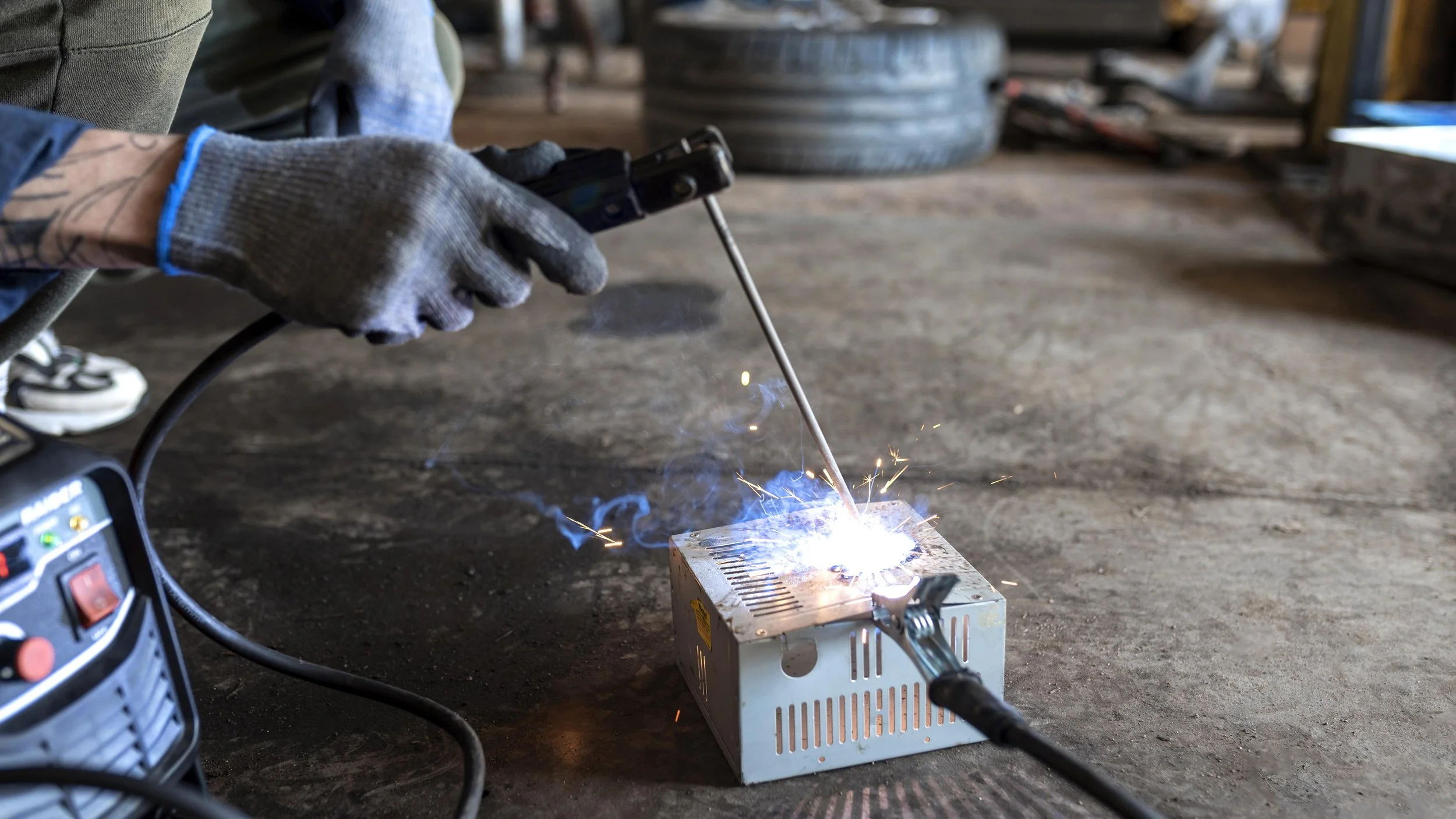
The regulation explicitly prohibits the use of permanent joining methods like welding, gluing, or any technique that prevents cells from being separated and reused. With these changing regulations, traditionally constructed spot-welded nickel strips in traditional packs are no longer compliant for the aforementioned uses.
Why This Matters
• Most lithium-ion battery packs today are built by spot-welding individual cells to form series and parallel connections. While this approach cuts manufacturing costs, it creates several long-term problems:
• Repair barriers: A single failed cell can damage an entire pack. Undoing welded connections risk impairment to surrounding cells.
• Recycling challenges: Disassembly is difficult, thus making material recovery inefficient and expensive.
• Waste surge: Entire battery packs often get discarded when a single faulty cell is present, further fueling the e-waste problem in Europe.
• Higher costs: Lack of repairability results in owners facing steep replacement bills over affordable repairs.
Article 11(5) counters these issues through pivoting towards sustainable innovation: prolong battery life through cell-level maintenance and repair, reduce waste via replaceable parts, fuel a circular economy with efficient disassembly, and cut costs for users and fleet operators. The requirements of Article 11(5) apply to portable batteries of general use and light means of transport (LMT) units. From February 2027, compliance will become mandatory for EU-market products. The time is fast-approaching for a shift in battery design and construction.
HYBA: Engineered for the New Standard
At HYBA, we continually anticipate, innovate, and build for the future. Our batteries are tested and proven in accordance with EU standards. Our system embeds repairability, modularity, and sustainability from day one, fully aligning with EU Regulation 2023/1542, Article 11(5). Our products go beyond compliance, they are created for practical, real-world benefits.
Traditional battery packs rely on spot-welded nickel strips to connect cells. HYBA eliminates welding entirely with our patented solution.
1. Weldless Electrical Connections
• Every HYBA Module consists of seven cylindrical cells (7p configuration) in a mechanical frame. Spring-loaded busbars connect the top and bottom – no welding, gluing, or permanence.
• Cells can be removed by hand or using basic tools.
• No specialized equipment (e.g. soldering irons, spot welders, etc.) is required for maintenance.
• Any cell can be individually replaced in minutes, extending the life of the entire battery pack.
2. LEGO-Like Modular Stacking
• HYBA Modules stack freely in any direction, like building blocks, for tailored fit.
• Configurations can be customized for different vehicle platforms (bikes, scooters, delivery rigs, or industrial equipment).
• Modules can be added or removed to accommodate different capacity and power requirements.
• Damaged modules can be easily replaced without pack disruption.
• This modularity makes HYBA batteries scalable, versatile, future-proof, suitable for applications ranging from a compact city scooter to a bulky cargo bike.
3. A Battery Built for Europe's Future
EU Regulation 2023/1542 is not just a legal requirement – it is Europe’s vision for a circular battery economy. By banning permanent joining methods, the EU is urging manufacturers to design batteries for endurance, cost-efficiency, and sustainability HYBA is proud to be at the forefront of this transition. We are not adapting to the future, but building it, defining what a next-generation battery should be: repairable, sustainable, and future-proof.
Key Features of HYBA Module:
• Optimized for 21700 cells
• Weldless 7p cell modules, stackable and fully modular
• No permanent joining—cells stack and connect mechanically
• Integrated NTC and balancing connectors to each module
• Improved maintainability
Ready to power your vehicle platform with a battery built for the future?